Celiogen Pharmacy Extension: Evidence Backed Drug Review

Medication safety is a critical part of clinical decision-making. Doctors often need to check drug interactions, medication allergies, contraindications, renal and hepatic considerations, dosing risks, and monitoring requirements before deciding whether a medication is appropriate for a patient. Celiogen’s Pharmacy Extension brings these medication safety checks, drug interaction analysis, and patient-specific medication review into the clinical workflow. Instead of switching between separate drug databases and clinical references, doctors can review relevant medication risks alongside patient context and other clinical information. The Pharmacy Extension is designed to support clinical decision-making, prescribing safety, and medication review. It can identify potential drug interactions, flag patient-specific risks, highlight missing information, explain why a medication combination may be concerning, and suggest monitoring considerations or potential alternatives. The goal is not to automate prescribing. It is to give doctors more relevant medication safety information at the point of clinical reasoning.
What Celiogen’s Pharmacy Extension Does
The Pharmacy Extension supports medication-focused clinical review. Instead of looking up a drug in isolation, the review can take the available patient information into account. Consider a patient being evaluated for spironolactone. The relevant question is not simply: “Is spironolactone appropriate?” The review may also need to consider: Current medications, Potassium level, Renal function, Heart failure or hypertension context, Relevant contraindications, Potential monitoring requirements. This creates a more patient-specific starting point for the clinical discussion.
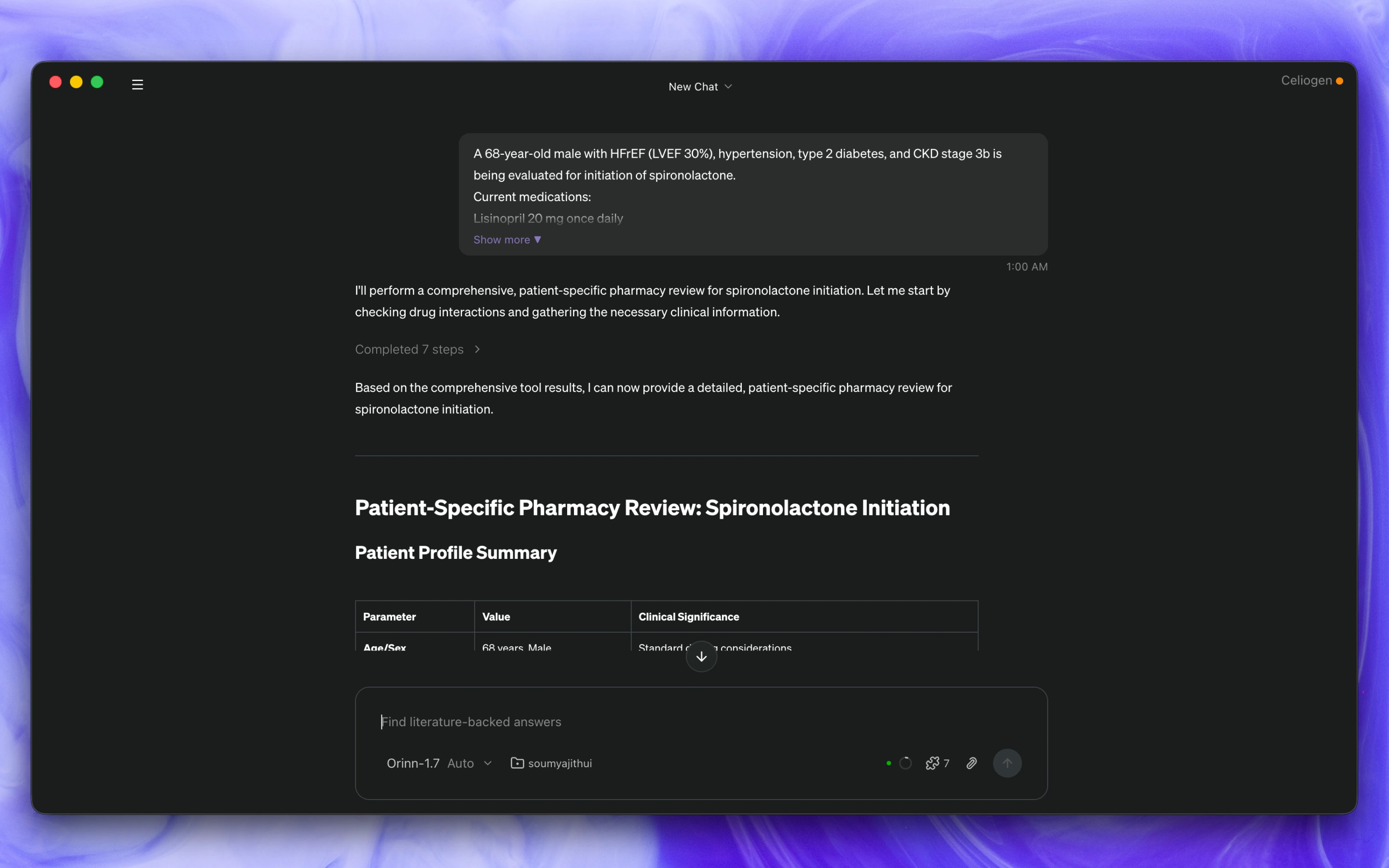
*Patient-specific pharmacy review in Celiogen, using clinical context to assess spironolactone initiation.
The screenshot shows how a medication question can be connected to the patient's broader clinical profile. That context helps frame the medication review around the actual case rather than the drug alone.
Drug Interaction Checks Beyond a Simple Alert
Polypharmacy makes medication review harder. Two drugs may interact directly. Several medicines may also create a combined risk that is easy to miss when they are checked separately. Celiogen can review multiple medications together and highlight clinically relevant concerns. For example, a review involving warfarin, aspirin, and fluconazole may surface: Bleeding risk, Pharmacological interactions, Potential INR concerns, Relevant monitoring needs, Other clinically significant combinations
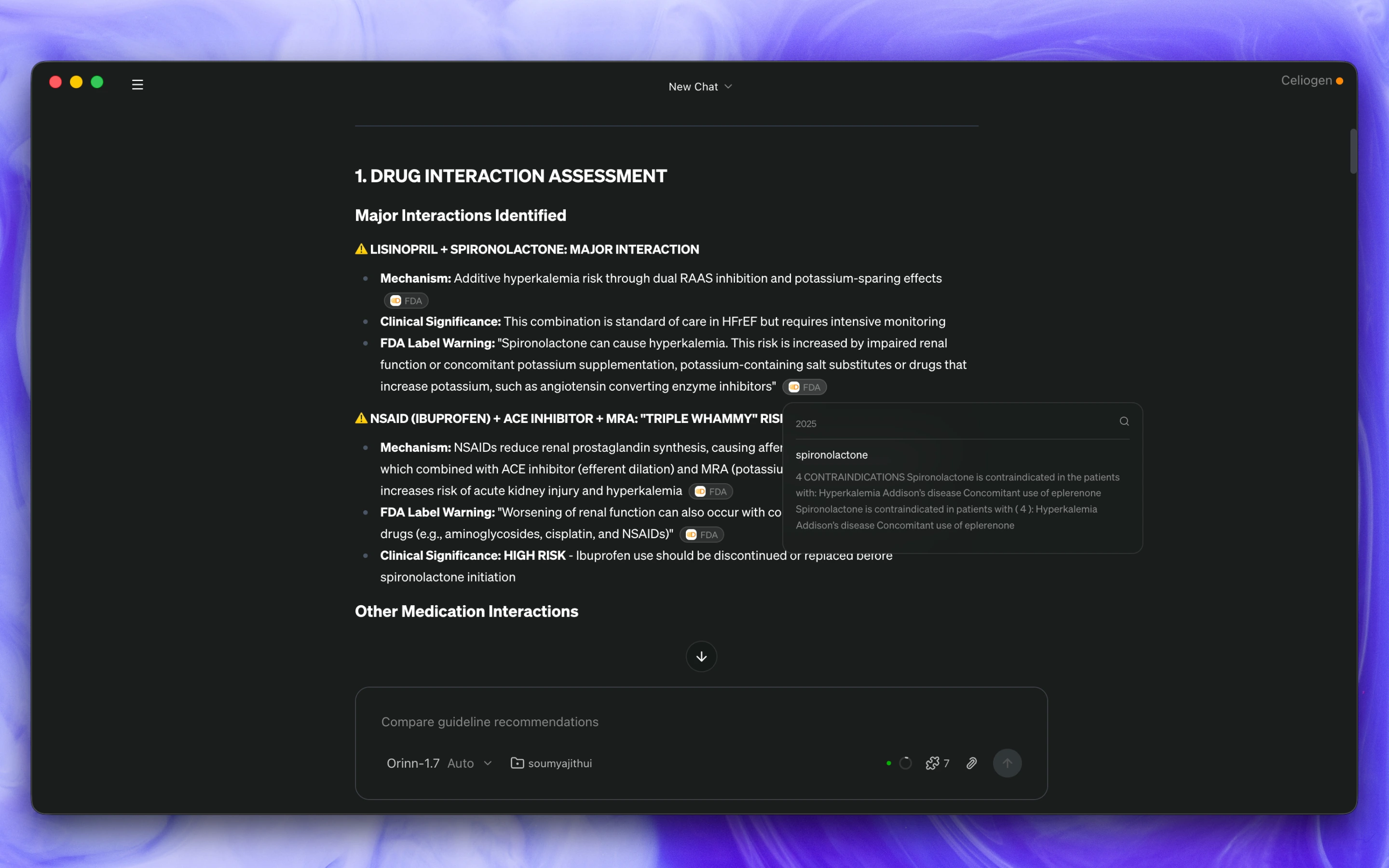
Drug interaction assessment in Celiogen showing major medication interactions and their clinical significance. The useful part is not only identifying that an interaction exists. The review can also put the finding into clinical context. That gives the doctor a clearer starting point for further assessment.
The Review Happens Before the Final Answer
Medication safety often requires several checks. Celiogen can work through the requested medicines, retrieve relevant drug information, and assess the available patient context before producing its response. The workflow can look like this:
Medication question → Drug identification → Patient context → Safety review → Clinical explanation → Monitoring or alternatives → Doctor review
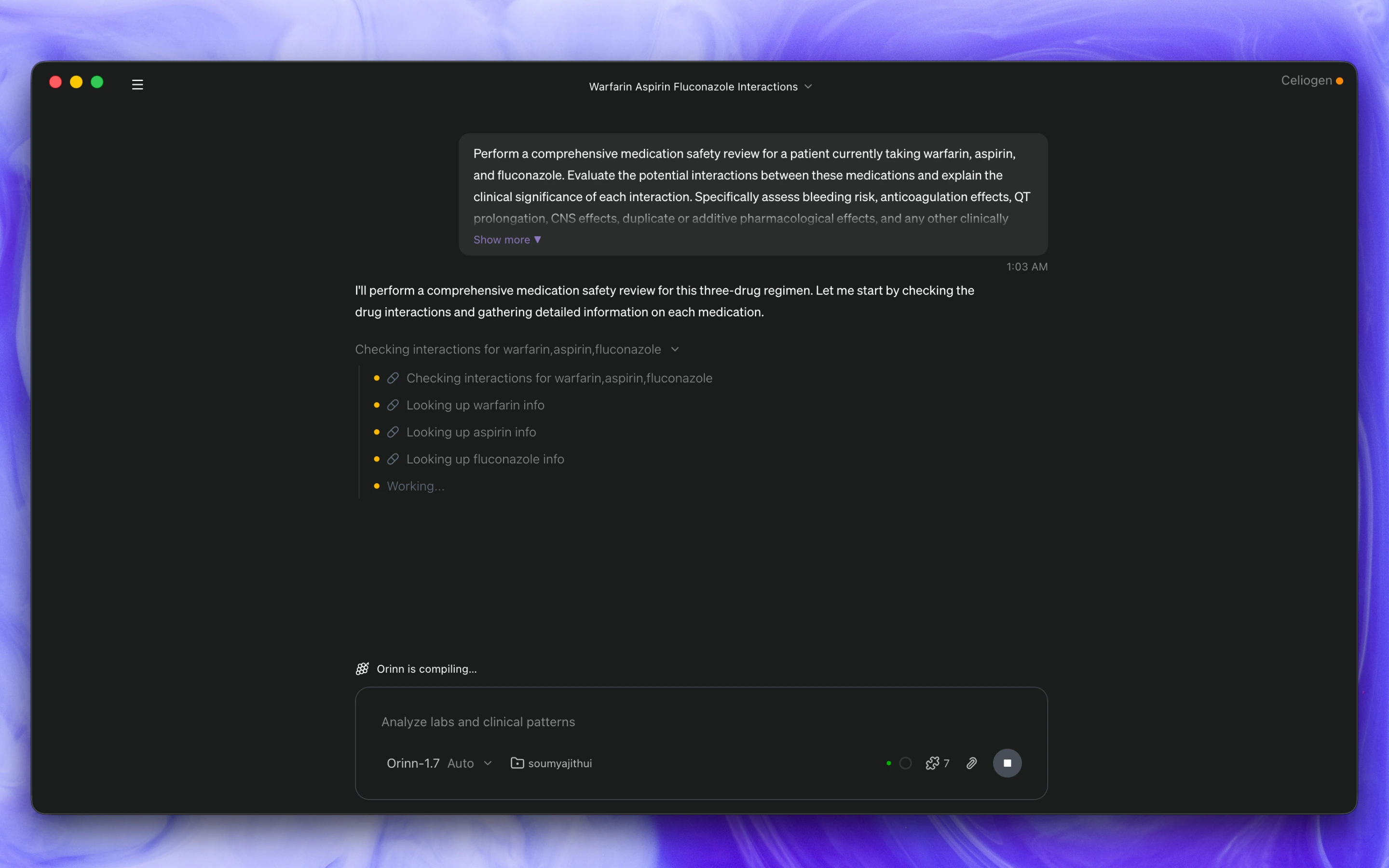
*Medication interaction review in progress inside Celiogen.
The screenshot shows the research process behind a medication-safety question. Instead of jumping directly from a prompt to a conclusion, the system works through the relevant medication information first.
From Interaction Detection to Clinical Explanation
An interaction alert alone is rarely enough. Doctors need to know why a combination may be concerning and what the finding could mean for the patient. Celiogen can provide a more detailed explanation of the identified risk, including the mechanism, clinical significance, and relevant safety information.
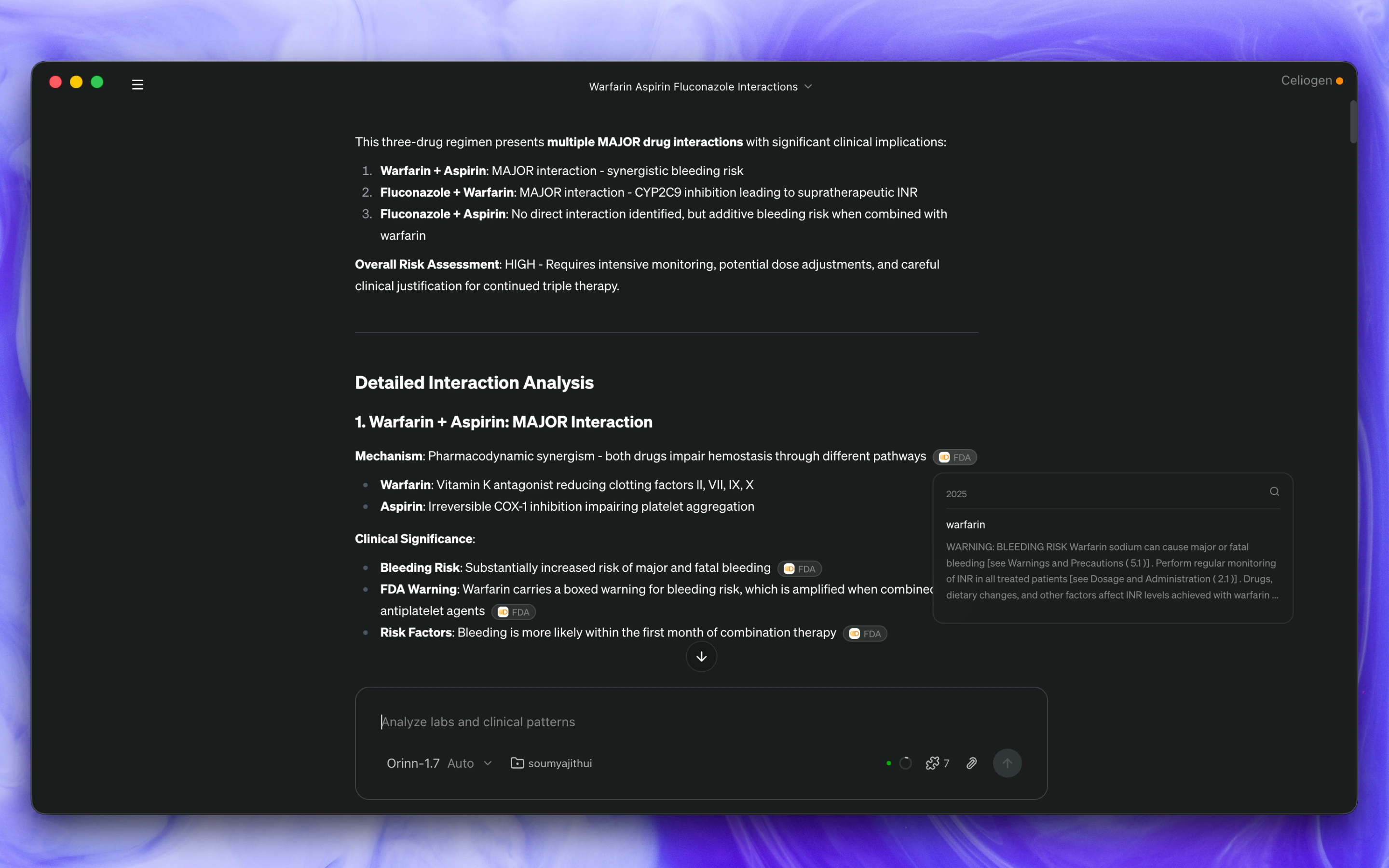
*Detailed interaction analysis showing the mechanism and clinical significance of medication risks.
For example, a warfarin and aspirin review can explain how both medicines affect hemostasis and why their combination can increase bleeding risk. This makes the result easier to interpret than a simple “major interaction” label.
Where It Can Help
The Pharmacy Extension can be useful across several common workflows:
Polypharmacy Review: Assess multiple medications together and identify potential interaction concerns.
Prescribing Safety: Review relevant patient factors before a medication decision.
Anticoagulant Review: Surface interactions, bleeding concerns, and monitoring considerations.
Antibiotic Selection: Consider allergies, interactions, patient factors, and potential alternatives.
Renal Dose Review: Identify when kidney function is important for medication assessment.
Chronic Disease Management: Review medication choices alongside the patient's existing conditions and treatment.
Discharge Medication Review: Check a medication list for potential issues before a patient leaves care.
Care Plan Review: Bring medication considerations into a wider clinical assessment.
Key takeaways
Medication safety, drug interaction checking, and patient-specific medication review are most useful when they happen alongside clinical reasoning. Celiogen’s Pharmacy Extension brings these capabilities into a single clinical decision-support workflow. Doctors can review drug interactions, medication allergies, contraindications, renal and hepatic considerations, dose-related risks, monitoring requirements, and potential medication alternatives without treating each check as a separate task. The value goes beyond a traditional drug interaction checker or medication database. Celiogen can connect medication information with the available patient context, helping doctors understand not only what interaction or risk exists, but also why it matters and what may need further review. This makes the Pharmacy Extension useful for prescribing safety, polypharmacy review, anticoagulant management, antibiotic selection, chronic disease medication review, renal dosing assessment, and discharge medication review. Celiogen remains a clinical decision-support tool, not an autonomous prescribing system. The clinician reviews the information, considers the complete patient picture, and makes the final medication decision. From drug interaction checking to patient-specific medication safety, Celiogen helps bring practical medication review directly into the clinical workflow.